Detailed Summary
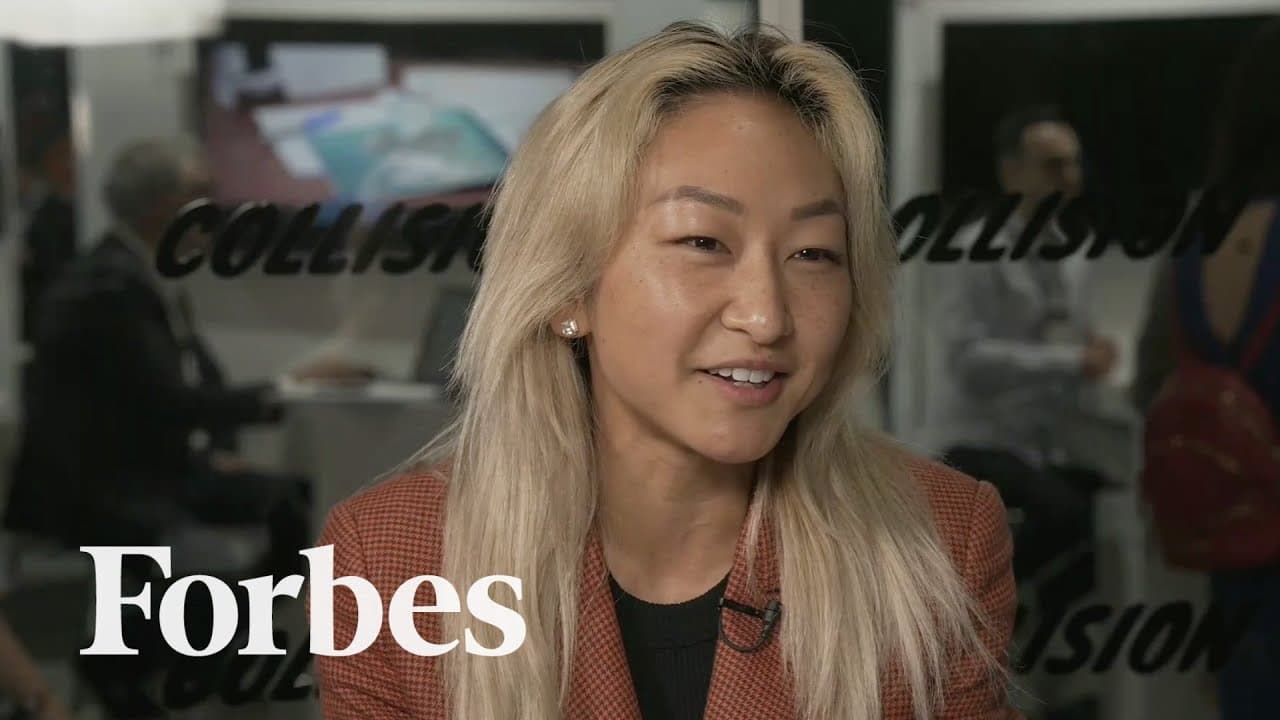
The podcast opens with hosts Kate Clark and Alex Wilhelm introducing their guest, Sarah Guo of Greylock Partners. They share a lighthearted "fun fact" about Sarah's dedication to venture capital and SaaS multiples. Alex humorously mentions his "10x or bust" back tattoo, setting a tone for the discussion on valuations.
- Introduction of hosts Kate Clark and Alex Wilhelm and guest Sarah Guo, General Partner at Greylock Partners.
- Sarah Guo's "fun fact" about her focus on venture and SaaS multiples.
- Alex Wilhelm's humorous reference to SaaS multiples and 2020 predictions.
Grammarly's Unicorn Status and Privacy (1:07 - 6:25)
The conversation shifts to Grammarly's recent $90 million funding round, which valued the company at over $1 billion. Alex expresses surprise at the consumer and SMB willingness to pay for such a product, drawing parallels to Office 365. The discussion touches on the ambiguity of "over a billion" valuations and Grammarly's functionality as a writing tool. A key point raised is the privacy implications of a tool that reads users' writing, contrasting it with past concerns about Gmail scanning emails for ads. Sarah Guo explains that Grammarly's direct-to-consumer/SaaS business model makes the data-for-service trade feel more transparent.
- Grammarly raised $90 million, valuing it at over $1 billion.
- Initial surprise at consumer and SMB demand for a paid writing tool like Grammarly.
- Discussion on the common practice of reporting valuations as "over a billion" rather than exact figures.
- Grammarly's features, including its ability to integrate with platforms like WordPress and its upcoming AI-powered style guide memorization.
- Concerns about the privacy implications of Grammarly reading user content, compared to past Google Gmail privacy issues.
- Sarah Guo's perspective on the transparent trade-off in direct-to-consumer SaaS models where data improves service.
Grammarly's Bootstrapping and Preemptive Rounds (6:25 - 11:12)
The hosts note Grammarly's unusual path of bootstrapping for eight years before raising significant VC funding. This leads to a discussion about Lattice, an employee performance and engagement tool, which raised a $25 million Series C preemptively from Tiger Global. This highlights a trend where large hedge funds are making early-stage investments without taking board seats, a different approach from Greylock's active investor model.
- Grammarly's history of bootstrapping for eight years before significant VC funding.
- Lattice, an employee performance and engagement tool, raised a $25 million Series C preemptively.
- Tiger Global's strategy of investing in early-stage SaaS without taking board seats.
- Greylock's preference for active investment and board seats, emphasizing governance and partnership.
- Example of Roblox, where Greylock invested significantly but didn't take a board seat due to an already full board.
Sales Tooling and SaaS Ecosystem (11:12 - 14:34)
The conversation moves to the sales tooling category, with companies like Clari (raised $60 million, valued at $500 million) and Aviso (raised $31 million total) building AI-powered sales analytics and guided selling tools. Sarah Guo expresses bullishness on the "Cambrian explosion" of SaaS companies, particularly in sales enablement, seeing ample room for innovation around Salesforce due to its ecosystem and the evolving data needs of businesses. The potential for a startup to eventually supplant Salesforce is also considered.
- Discussion of sales tooling as a growing SaaS category with companies like Clari and Aviso.
- Clari raised $60 million for sales analytics and forecasting, valued at $500 million.
- Aviso raised $31 million for AI-powered guided selling.
- Sarah Guo's view on the "Cambrian explosion" of valuable SaaS companies, especially in sales enablement.
- The belief that there is significant room for innovation around Salesforce due to its limitations in engagement, enablement, and analytics.
- Consideration of whether a new startup could eventually supplant Salesforce in the market.
Global Venture Scene and Valuation Concerns (14:34 - 19:59)
The discussion broadens to the global venture scene, noting that while Q3 2019 saw slight dips in domestic Series B and global Series A rounds, the overall market remains strong. The hosts and guest agree that funding stages are becoming increasingly blurred due to larger round sizes. Sarah Guo highlights a shift in sentiment regarding late-stage pre-IPO valuations, with investors questioning the health of assigning "breakout winner" valuations to every company. The example of Dropbox's early overvaluation is used to illustrate the negative impact of inflated expectations.
- Analysis of Q3 2019 venture data, showing slight decreases in domestic Series B and global Series A rounds.
- Overall sentiment that the venture market remains strong, with high deal values.
- Observation that funding stages (Series A, B, C) are becoming less distinct due to increasing round sizes.
- Concerns about inflated valuations in the late-stage pre-IPO market and the realization that not every company will be a "breakout winner."
- The distinction between an individual investor's bet and a company's actual durability or business strength.
- Dropbox's early $10 billion valuation in 2014, which later dropped to $8.1 billion, as an example of overvaluation creating undue pressure.
Profitability, Market Leadership, and Media Focus (19:59 - 26:17)
Sarah Guo explains Greylock's investment philosophy, prioritizing market leadership and capital efficiency over immediate profitability for early-stage companies. She uses Uber as an example of the value of market leadership. The conversation then critiques the media's focus on large funding rounds and valuations, often at the expense of reporting on crucial metrics like CAC to LTV ratio or gross margins, which companies rarely disclose. The WeWork saga is cited as a prime example of how media attention on inflated valuations can go wrong, leading to the glorification of a company with fundamental business model issues.
- Greylock's investment strategy: prioritize market leadership and capital efficiency over immediate profitability in early-stage ventures.
- The value of market leadership in SaaS and consumer companies, exemplified by Uber's user base and brand.
- Critique of the media's focus on large funding rounds and valuations due to data availability.
- The media's inability to report on key business metrics like CAC to LTV ratio or gross margins due to company non-disclosure.
- Palo Alto Networks cited as an example of a highly successful company ($20+ billion) that raised less than $60 million in venture capital, demonstrating capital efficiency.
- The WeWork situation as a cautionary tale of media glorifying a company with fundamental business model flaws and an "eccentric" executive.
SmileDirectClub and Valuation Discrepancies (26:17 - 28:29)
The discussion highlights SmileDirectClub's IPO in September as a real-world example of public investors rejecting the optimistic private valuations of a company. This reinforces the idea that not all "tech-enabled" businesses should receive high SaaS multiples, as their underlying business models (e.g., groceries, real estate) dictate different valuation metrics. The hosts and guest agree that a more sober approach to valuations, distinguishing between true software companies and tech-enabled services, is a healthy development for the market.
- SmileDirectClub's IPO as an example of public markets rejecting private market optimism regarding revenue quality.
- The importance of distinguishing between software companies (high marginal revenue, recurring, expandable) and other businesses (e.g., groceries) when assigning revenue multiples.
- Instacart used as an example of a company whose valuation should be scrutinized based on its underlying business model.
- The emerging "anti-lunacy" sentiment in the market, promoting more realistic valuations based on fundamental business advantages.
Tempest: A Sobriety Startup (28:29 - 31:22)
Kate Clark profiles Tempest, a virtual sobriety school that raised a $10 million Series A. The 8-week program costs $600 and offers resources for alcohol sobriety. The founder, Holly, claims a new methodology distinct from traditional programs like AA. Alex Wilhelm, who is sober, expresses attraction to non-12-step programs but also wariness about the profit component in mental health services. They discuss Tempest's target audience, likely those on the edge of problem drinking rather than clinically addicted individuals, and its focus on women and historically oppressed individuals, contrasting it with AA's outdated, male-centric origins.
- Tempest, a virtual sobriety school, raised a $10 million Series A from Maveron.
- The 8-week program costs $600 and offers lectures, Q&A, and community support for alcohol sobriety.
- Founder Holly claims a new methodology distinct from AA.
- Alex Wilhelm's personal perspective: appreciation for non-12-step programs but caution regarding the profit motive in mental health.
- Tempest's likely target audience: individuals seeking a break from drinking or on the edge of problem use, rather than clinically addicted.
- Tempest's focus on women and historically oppressed individuals, contrasting with AA's historical male-centric bias (e.g., "To the Wives" chapter).
D2C Trends and Conclusion (31:22 - 33:12)
The conversation briefly touches on the proliferation of new beverage brands, including CBD-infused sodas and low-alcohol options, all attracting venture capital. Sarah Guo notes Greylock's interest in e-commerce growth and distribution channels rather than individual D2C brands. Alex Wilhelm shares his personal experience of buying D2C brands advertised on Instagram, while Kate Clark prefers buying them in brick-and-mortar stores. Alex humorously concludes that being off Instagram has saved him money. The hosts thank Sarah Guo and wrap up the episode.
- Discussion of new beverage brands (CBD-infused, low-alcohol) receiving venture capital.
- Greylock's focus on e-commerce growth and distribution infrastructure rather than specific D2C brands.
- Personal consumer habits regarding D2C brands and Instagram advertising.
- Alex Wilhelm's humorous observation about saving money by being off Instagram.
- Conclusion of the podcast episode.