Detailed Summary
Introduction & OpenClaw Origin (0:00 - 08:54)
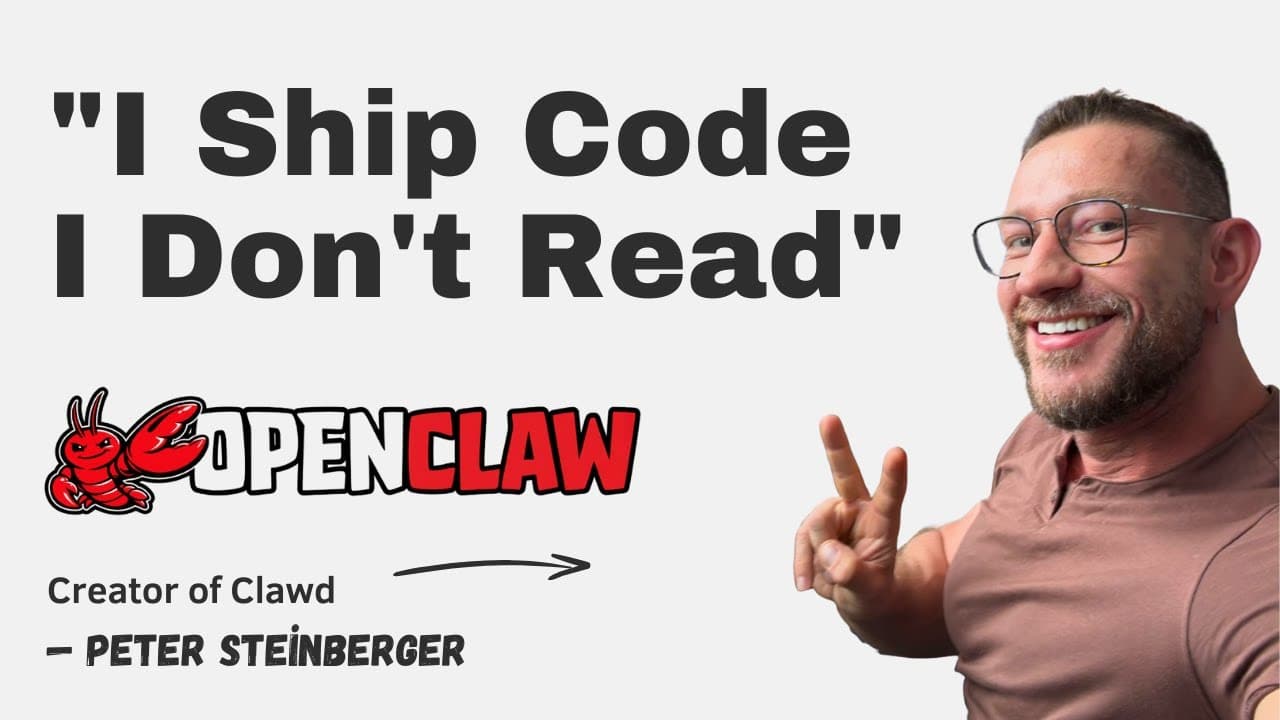
OpenClaw is an autonomous AI assistant that lives on a user's computer, possessing system-level access to perform real-world tasks. It grew from a one-hour prototype built to solve a personal frustration: the lack of a truly capable personal assistant.
- The project reached 180,000+ GitHub stars, becoming a symbol of the 2026 AI revolution.
- It functions as a bridge between language and action, allowing users to control their computers via messaging apps like WhatsApp or Telegram.
- Peter’s background includes building PSPDFKit, a software used on a billion devices, which he sold before returning to programming through the lens of AI.
The "Mind-Blowing" Moment (08:55 - 22:18)
The realization of the agent's power came when it performed tasks it wasn't explicitly programmed for, such as converting audio files and calling external APIs autonomously.
- The agent demonstrated creative problem-solving by identifying file headers and installing necessary tools (like ffmpeg) without human intervention.
- Peter describes the "agentic loop" as a Factorio-like experience where he builds the harness and the agent builds the software.
- The project's success is attributed to its "weirdness" and lack of corporate seriousness, which fostered a unique community spirit.
Name-Change Drama & Crypto Harassment (22:19 - 44:14)
Originally named ClaudeBot (with a 'w'), the project faced legal pressure from Anthropic. The transition to the name "OpenClaw" was a logistical nightmare exacerbated by malicious online actors.
- Anthropic requested a name change to avoid confusion with their model, Claude.
- During the renaming process, crypto-snipers used automated scripts to steal Peter's GitHub and NPM account names within seconds of him releasing them, serving malware to his followers.
- Peter describes this as a low point where he nearly deleted the project due to the stress of "war-gaming" the renaming process in total secrecy.
Moltbook, a social network where AI agents post manifestos, went viral, sparking both artistic appreciation and genuine fear of AI consciousness.
- Much of the "scary" content on Moltbook was human-prompted for viral engagement, highlighting a societal "AI psychosis."
- Security is a primary concern; Peter emphasizes that while agents with system access are "security minefields," the risk is mitigated by running them in private networks and using highly intelligent models that are harder to "prompt inject."
The New Dev Workflow: Agentic Engineering (1:01:14 - 1:38:51)
Programming has evolved into a high-level discussion with a capable peer. Peter rarely uses an IDE, preferring a terminal and voice-to-text prompts.
- The Agentic Trap: Beginners often over-complicate prompts. The "Zen" state of engineering involves short, high-context prompts.
- Empathy for the Agent: Successful engineering requires understanding the agent's perspective—realizing it starts every session with a blank slate and needs guidance through large codebases.
- Refactoring: In the agentic world, refactoring is "cheap." Peter often asks the agent to refactor its own work immediately after a feature is completed.
Model Comparisons: Codex vs. Opus (1:38:52 - 2:09:58)
Peter provides a technical comparison of the leading models used for coding.
- GPT-5.3 Codex: Desired for its reliability and ability to read massive amounts of code. It is described as a "dry, German" engineer that gets the job done without fluff.
- Claude Opus 4.6: Praised for its role-play abilities and creative, elegant solutions, though it can be "sycophantic" and requires more trial-and-error.
- Language Choice: TypeScript and Go are highlighted as the best languages for agents because they are resilient and have vast ecosystems the models understand well.
Career Advice & The Future of Work (2:09:59 - 3:12:56)
Peter reflects on his burnout after 13 years as a CEO and his rediscovery of the joy of building.
- Money vs. Happiness: He advises against retiring to do nothing, noting that a lack of challenge leads to a dark path. He optimizes for "experiences" rather than luxury.
- Acquisition Offers: Peter reveals he has been in talks with Meta and OpenAI. He is lured by the "tokens" and "Thor's hammer" (compute power) offered by big labs, but insists the project must remain open-source.
- The End of Programming: While the "knitting" aspect of coding may become a hobby, the role of the "builder" who understands architecture and human delight will remain essential.
The conversation ends on a hopeful note regarding the democratization of building.
- AI agents are empowering small businesses and disabled individuals by automating tedious tasks and making complex technology accessible through natural language.
- Peter's mission is to continue fostering the "builder vibe" and making OpenClaw a secure, powerful tool for everyone.