Detailed Summary
Loop Engineering Before the Name (0:00 - 1:01)
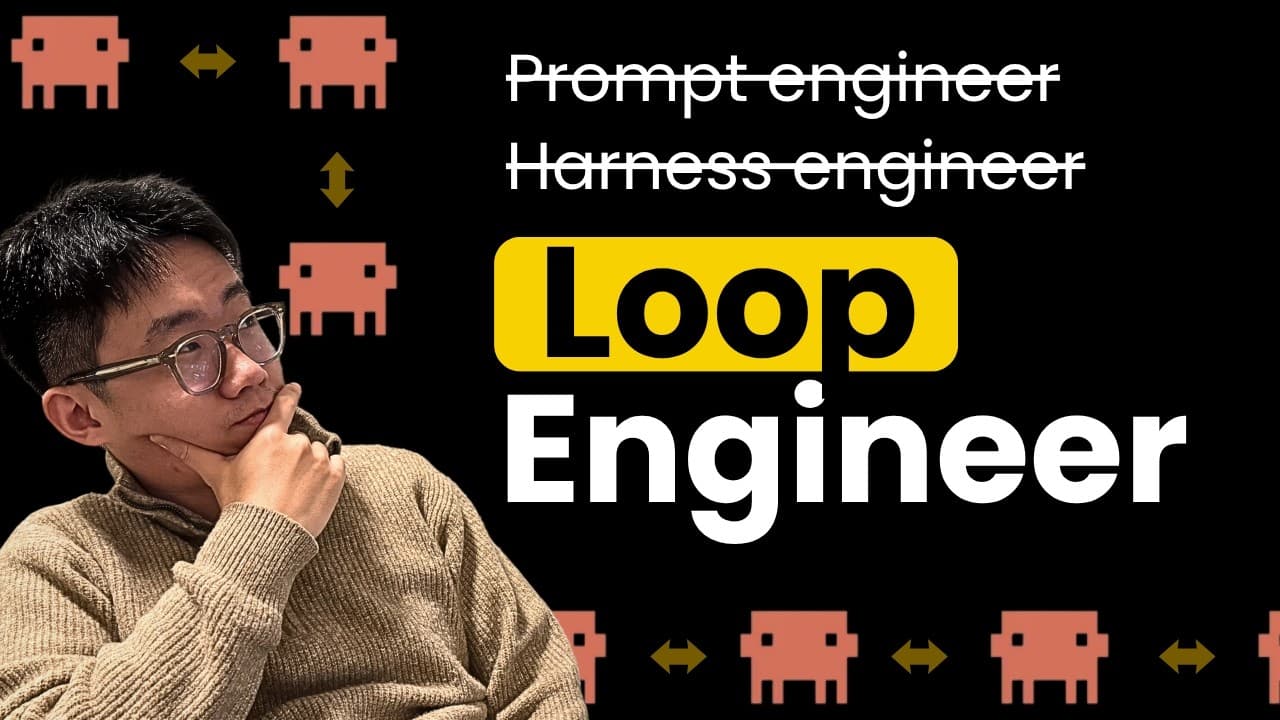
Loop engineering is presented as the next significant leap in software development, comparable to the transition from source code to agents. Currently, approximately 30% of the code produced in this workflow is generated through loops. The goal is to move beyond manual prompting toward a system where a larger percentage of work is expressed as self-sustaining cycles.
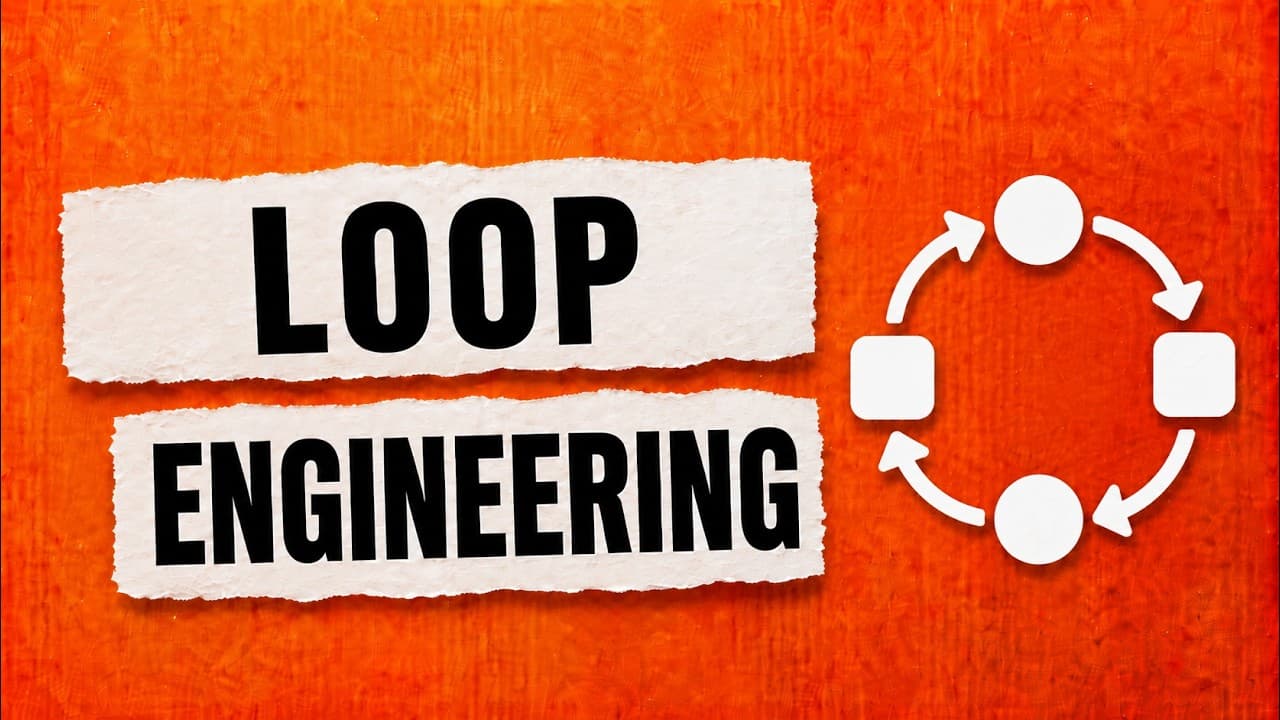
An agentic loop consists of a trigger, an act/observe cycle, and a stop condition.
- Trigger: Can be a prompt, a system state, or an external event.
- Act/Observe: The agent performs a task (e.g., an edit or CLI call) and then observes the result to determine the next step.
- Stop Condition: The point where the human enters the loop to verify the final output.
Loop engineering focuses on widening this cycle so the agent performs more work independently before requiring human intervention.
Evolution of the Loop: Tests and Browsers (2:59 - 5:35)
Early versions of loops involved Test-Driven Development (TDD), where agents worked to pass a specific test. This expanded with the introduction of browser modes and Playwright MCP, allowing agents to check their own work in web applications. The introduction of Cursor Cloud Agents provided a persistent, isolated desktop environment where agents can log into applications and perform visual manual testing, which significantly increases the efficiency of the human reviewer.
Human-Driven PR Looping (5:35 - 8:37)
Workflow efficiency increased by moving agent interaction directly into pull requests. Instead of giving specific instructions, feedback can be open-ended, such as asking the agent to fix CI failures. By instructing an agent to "repeat until all valid feedback has been addressed," a loop is created where the agent reacts to AI reviewer bots (like Code Rabbit or BugBot). This process can be further automated to notify the developer via Discord (using tools like Cody) only when the loop reaches its stop condition.
Boundaries and Stop Conditions (8:37 - 9:37)
While loops increase autonomy, human-defined boundaries are essential for security and accuracy. Isolated environments, such as those provided by cloud agents, help mitigate risks. The stop condition remains the most valuable part of the loop, ensuring the human retains final judgment over the product decisions.
Automations serve as triggers that initiate loops without human prompts. Examples include:
- CI Failures: Automatically triggering an agent to open a PR to fix a failed production deploy.
- Documentation Sweeps: Nightly agents that remove temporal or negative language from docs based on the last 24 hours of changes.
- Regression Cleanup: Agents that identify and remove unnecessary tests for deleted features.
Trading Compute for Attention (11:29 - 12:24)
Loop engineering is a trade-off: compute is exchanged for developer attention. This can become expensive, especially with cloud machines and multiple retries. Users must ensure the value of the work produced justifies the cost of the compute to avoid unexpected bills.
Viewers are encouraged to automate one manual loop they currently perform by hand. The core philosophy is that good agents make code cheaper to generate, while good loops make work cheaper to verify. While current tools will eventually integrate these loops natively, practicing loop engineering now provides a competitive advantage in the evolving landscape of product engineering.