
Too Long; Didn't Watch — Summary
Loop engineering involves designing autonomous systems where AI agents manage project backlogs and execute technical tasks through self-prompting cycles, protected by rigorous guardrails and human review.
Loading summary...
4 min read (83% time saved)
Loop engineering involves designing autonomous systems where AI agents manage project backlogs and execute technical tasks through self-prompting cycles, protected by rigorous guardrails and human review.
Summarize another video
Press ⌘K to quickly paste a new URL
Loop engineering is often discussed in abstract terms, but it essentially means building systems where agents operate autonomously.
At its core, a loop is an agent performing repetitive tasks based on a schedule or specific events.
The first loop in a dual-system setup is the Manager Loop, which handles the administrative overhead of engineering management.
The Worker Loop picks up where the manager leaves off by executing the actual technical work.
Building these systems requires creating 'skills' that encode specific engineering processes.
Transitioning to autonomous loops allows engineers to scale their productivity by focusing on review rather than execution.
"You shouldn't be prompt coding agents anymore. You should be designing loops that prompt your agents." — Peter Seinberger (referenced)
"The agent is writing this prompt... the system is writing its own prompts." — Owen Lewis
"If you're a systems thinker, the input is a task and the output is a pull request." — Owen Lewis
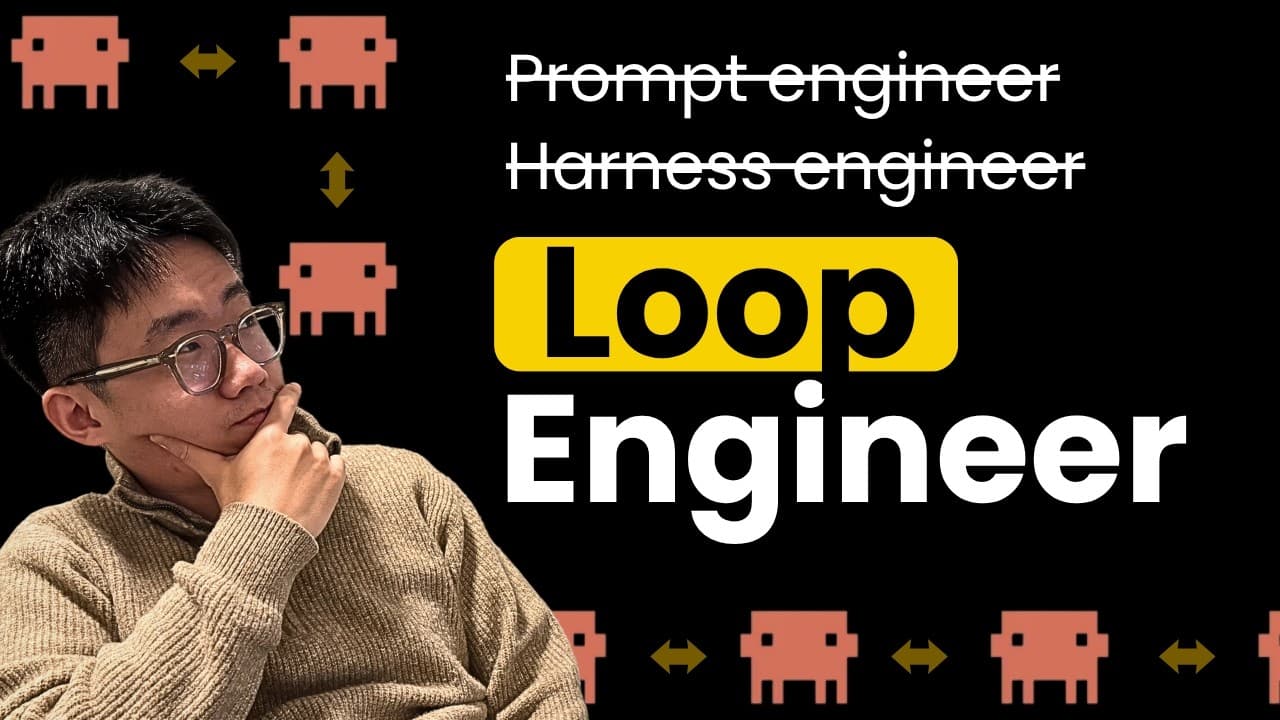
AI Jason
4 min read

GitHub
3 min read

openclaw
4 min read
What's AI by Louis-François Bouchard
4 min read

灵姐说AI | Ling Talk AI
3 min read

Nate Herk | AI Automation
5 min read