Detailed Summary
Introduction and History (0:00 - 05:07)
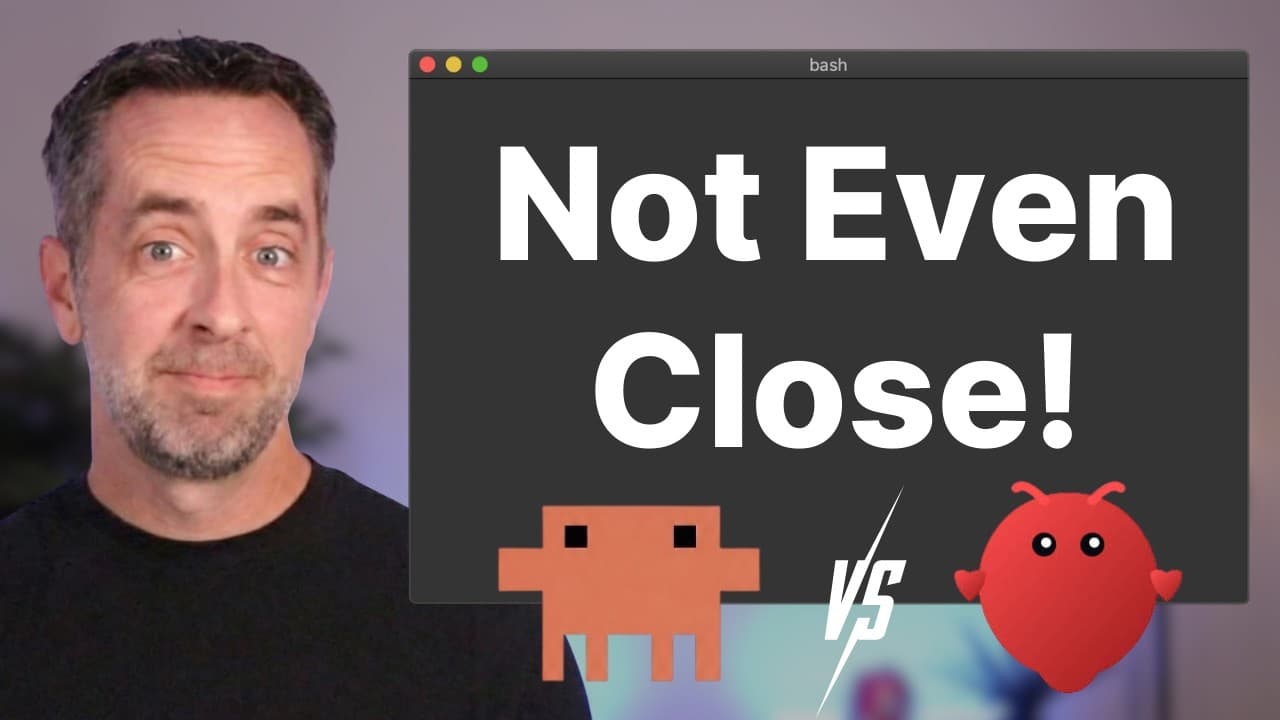
Overview of the comparison between Paperclip AI and the newer Multica platform.
- Paperclip AI was released around March 2026 and has approximately 57,000 GitHub stars.
- Multica appeared about a month later and currently holds 19,000 stars, showing rapid growth.
- Both tools share striking UI similarities, including left-hand navigation for issues, inbox, and search.
- The presenter suspects Multica may be a fork of Paperclip with specific customizations for better usability.
Comparison of the installation experience for both technical and non-technical users.
- Multica offers three versions: a SaaS web version, a localhost version, and a dedicated desktop application (DMG for Mac, Windows installer).
- Paperclip is primarily CLI-driven and lacks a native desktop wrapper, making Multica more accessible to average users.
- Authentication in Multica involves a specific bypass code (888888) during the email verification step for local setups.
- Both tools are capable of running locally to ensure data privacy and file system access.
UI Philosophy: Workspace vs. Company (10:07 - 15:06)
Analysis of how each platform frames the user's interaction with AI.
- Paperclip is oriented toward startups, using terminology like 'CEO,' 'CMO,' and 'Founding Engineer.'
- Multica uses a 'Workspace' construct, which is preferred for personal productivity and 'AI for life' use cases.
- Multica removes the hierarchical reporting structure (e.g., Agent A reporting to Agent B) in favor of independent agents working on a shared control plane.
Agent Management and Kanban Workflow (15:06 - 25:07)
Deep dive into the 'Issues' system and the human-in-the-loop experience.
- Multica features a built-in Kanban board (Backlog, To-Do, In-Progress, Review, Done).
- When an issue is assigned to an agent, it automatically moves to 'In-Progress' and then to 'Review' once completed.
- This system requires a human to manually move tasks to 'Done,' which provides control but may become a bottleneck at scale.
- Paperclip's approach is more 'fire and forget,' where a 'CEO' agent manages the lifecycle of tasks without constant human intervention.
Comparison of automation triggers and scheduling.
- Paperclip uses a 'Heartbeat' (e.g., every 60 seconds) where agents wake up to scan for new issues.
- Multica lacks a heartbeat; instead, it uses 'Autopilot' routines based on cron schedules (e.g., daily at 9:00 AM).
- While Paperclip's heartbeat feels more like a living system, Multica's cron approach is more traditional for scheduled maintenance tasks like insurance or wealth reviews.
Technical breakdown of how agents are powered and how they access tools.
- Multica treats 'Runtimes' as first-class objects, scanning the local machine for Claude, Gemini, or Open Code CLIs.
- This allows Multica to use a user's existing Claude Max subscription via CLI rather than burning expensive API tokens.
- Skills are decoupled from the platform; they are stored as local files that can be ported between Multica, Paperclip, or Claude Desktop.
- This 'single source of truth' ensures that if one platform fails, the agent's logic and data remain intact.
Chat Experience and Interaction (45:05 - 55:08)
Demonstration of Multica's standout feature: the integrated chat.
- Multica allows users to open a chat window with any agent (e.g., Wealth Agent) to ask questions or give commands.
- Users can instruct an agent via chat to 'create a routine' or 'analyze my vault,' and the agent will execute the task immediately.
- Paperclip lacks this natural chat interface, requiring more manual UI interaction to trigger specific agent behaviors.
Final Thoughts and Comparison (55:08 - 59:00)
Summary of why Multica is currently the preferred choice for personal AI systems.
- Multica wins on simplicity, the chat experience, and the lack of corporate 'noise.'
- Paperclip remains strong for its plugin ecosystem and established community, but it needs to add a chat interface to stay competitive.
- The presenter intends to migrate most personal workflows to Multica for further testing.