Detailed Summary
Overview of the necessity of automating classes of work rather than individual tasks.
- Demonstration of an automated Amazon shopping workflow using Claude Code in fast mode.
- Introduction of the 'Bowser' codebase, designed for agentic browser automation.
- Comparison between personal automation (shopping) and professional engineering tasks (UI testing).
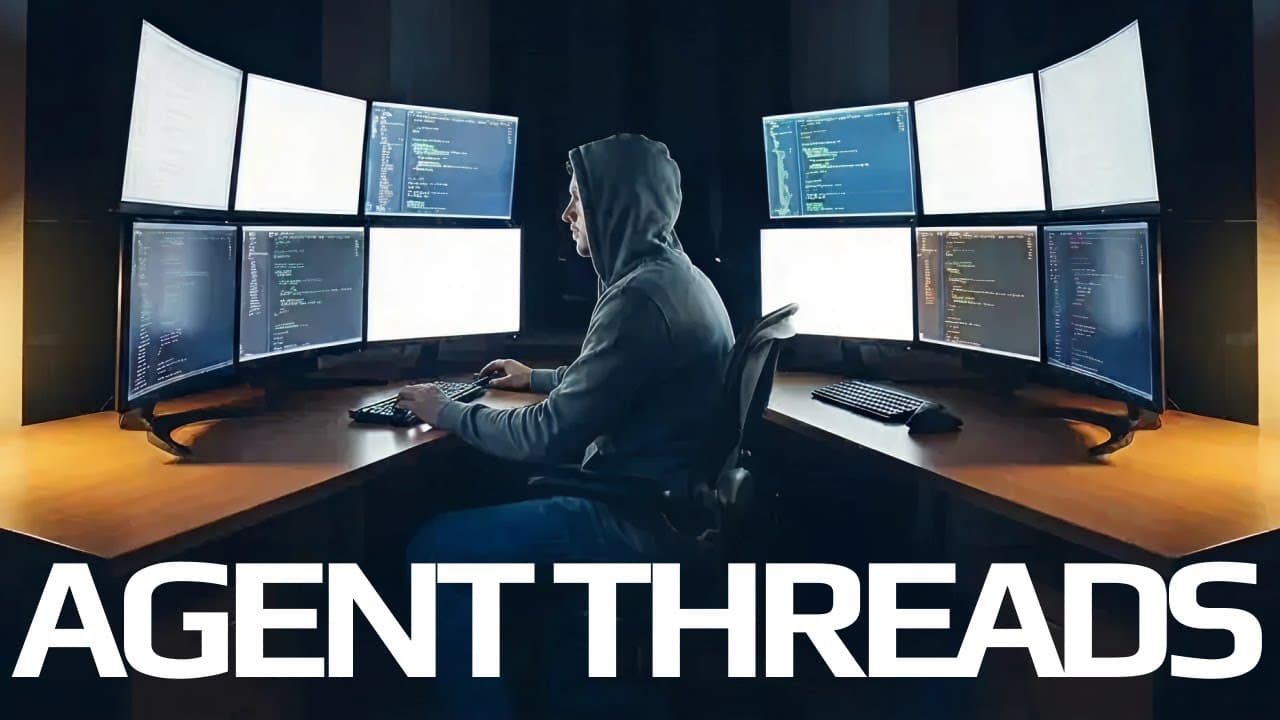
- Initial look at parallel UI testing on Hacker News using three simultaneous browser agents.
The Core Technology Layer (02:17 - 04:21)
Analysis of the foundational tools used to build the automation stack.
- Claude with the
-chrome flag is used for personal browser sessions, allowing agents to use existing login states.
- Playwright CLI is the preferred tool for scaling UI testing due to its token efficiency and lack of MCP overhead.
- The importance of 'screenshot trails' is highlighted, providing a visual audit of every step an agent takes for debugging failures.
Deep dive into the foundational capability layer where raw tools are defined.
- The Playwright skill is built to be token-efficient, headless by default, and supports named sessions for stored state.
- The Claude browser skill acts as a wrapper to ensure the Chrome flag is active and handles basic window resizing.
- Emphasis on the idea that code is commoditized; the advantage lies in the specific, opinionated solution built into the skill.
How to scale skills into specialized agents for parallel execution.
- Subagents are used to prompt over and over for specific UI testing or automation tasks.
- A 'Browser QA Agent' is introduced as a specialized UI validation agent that parses user stories into actionable steps.
- Demonstration of the Amazon workflow completing a 20-minute task autonomously, including cart management and stopping just before the final purchase.
- Discussion on the 'buff' subagents received through new orchestration features in Claude Code.
Layer 3: Slash Commands & Orchestration (12:43 - 20:03)
Using reusable prompts and 'Higher Order Prompts' (HOPs) to coordinate agent teams.
- Custom slash commands (e.g.,
/ui-review) act as the orchestration layer to fire off parallel story validations.
- Introduction of 'Higher Order Prompts'—prompts that take other prompts as parameters to wrap them in consistent workflows.
- Meta-prompt engineering: teaching a primary 'orchestrator' agent how to prompt its subagents for specific results.
- The benefit of non-deterministic agentic testing: agents act like users and can quickly adapt to new URLs or UI changes.
Layer 4: Reusability with Just Files (20:04 - 24:57)
Implementing a task runner to provide a single entry point for all agentic workflows.
- The
just command runner (aliased to j) is used to store and execute complex agent commands with default parameters.
- This layer ensures that the engineer, the team, and even other agents know exactly which tools and workflows are available.
- Demonstration of a 'Test Chrome Skill' that visits a blog, finds the latest post, and provides a summarized rating.
- The goal is to solve 'classes of problems' so that every subsequent task requires less human intervention.
Conclusion: Agentic Engineering vs. Vibe Coding (24:58 - 27:12)
Final thoughts on the professional evolution of the engineer in the age of AI.
- Warning against 'outsourcing learning' to plugins; engineers must understand the underlying layers of their agents.
- Distinction between 'Vibe Coders' (who don't know what their agents are doing) and 'Agentic Engineers' (who design the systems).
- Final encouragement to specialize and combine that specialization with scale and orchestration.