Detailed Summary
Introduction to Ralph Loop (0:00 - 8:21)
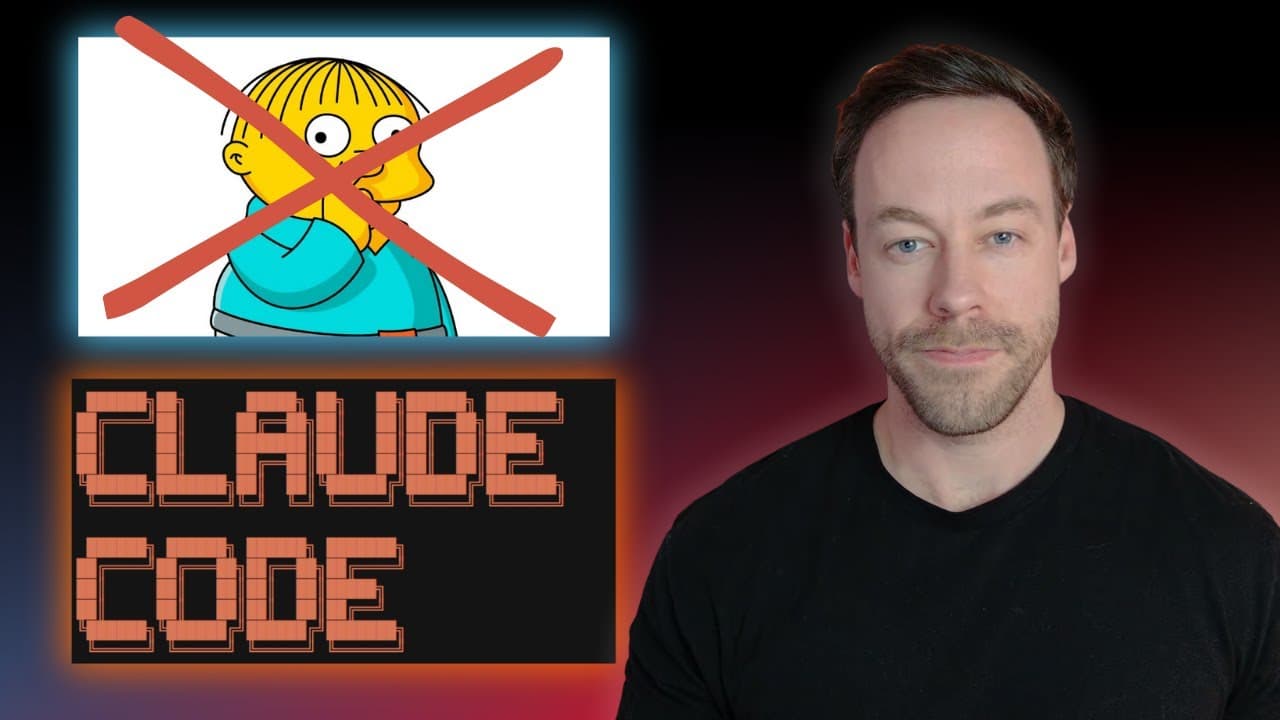
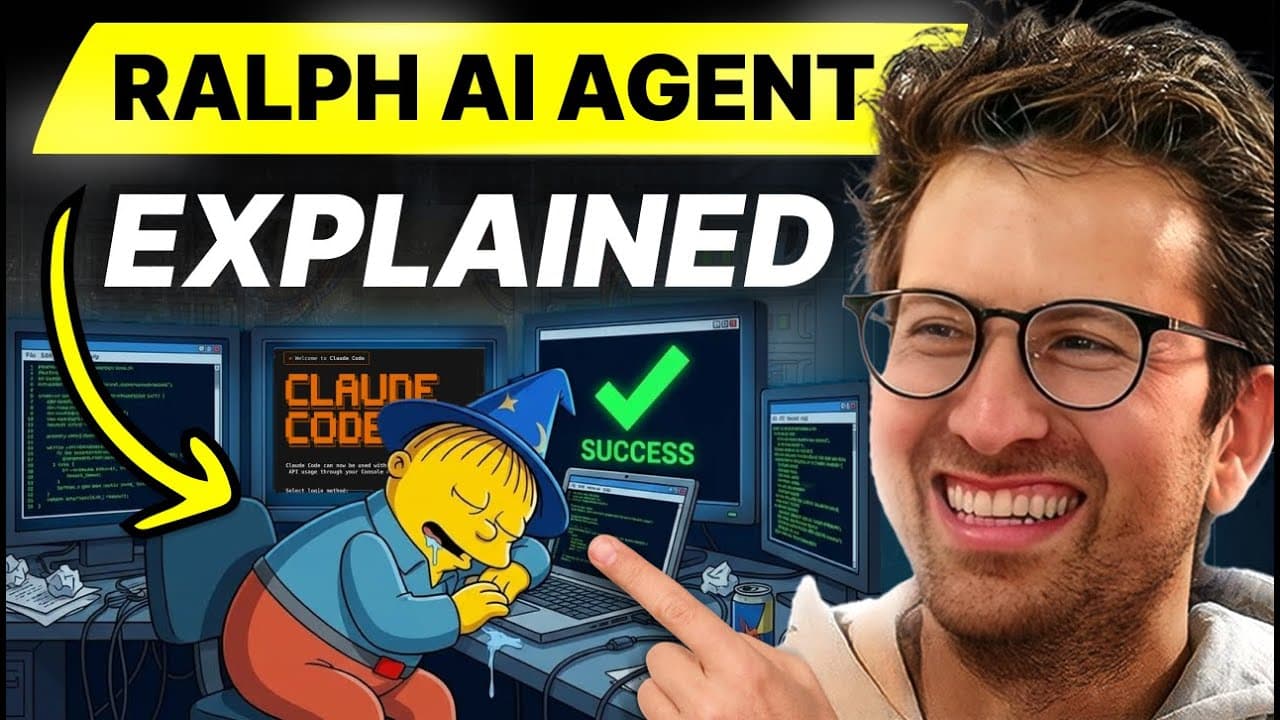
The presenter welcomes viewers back to the 16x Engineer channel, highlighting the Ralph Loop as a potential major breakthrough in AI coding, comparable to GitHub Copilot, ChatGPT, Cursor, and Claude Code. He outlines the stream's plan, which includes discussing his current Claude Code setup, explaining the Ralph Loop, critiquing existing implementations, and building a new project with his own Ralph Loop implementation.
- The Ralph Loop is considered the next significant breakthrough in AI coding.
- The presenter's existing Claude Code setup, involving a roadmap and separate task files, is deemed highly effective for managing agent context.
- This existing workflow has successfully completed over 100 complex tasks in a short period.
- The stream aims to integrate the Ralph Loop into this proven workflow.
What is the Ralph Loop? (8:21 - 15:11)
The core concept of the Ralph Loop is a simple while loop where an agent continuously receives a fresh context, processes a task, and continues until a verifiable exit condition is met. The presenter emphasizes the importance of proper context management and clear exit criteria.
- The Ralph Loop is fundamentally a
while true loop where an agent is prompted with the entire project context.
- The agent reads the context, determines the next step, and continues looping if not done, exiting upon completion.
- Key challenges include defining verifiable rewards for task completion and efficient context management to ensure the agent always has a fresh context.
- Ryan Carson's explanation of the Ralph Loop components (loop file, prompt file, progress file, PRD file) is highlighted as a good reference.
- The presenter plans to use markdown files for task lists in the PRD, similar to his existing workflow, rather than JSON.
Key Components of a Proper Ralph Loop (15:11 - 19:17)
The presenter outlines the essential elements for a functional Ralph Loop, drawing from his research and experience, and introduces his own enhancement: a plan and execute mode.
- While Loop: The fundamental structure for continuous operation.
- Agent: Claude Code is chosen as the agent for its capabilities.
- Exit Condition: A detailed and explicit completion promise that the agent must output to terminate the loop, preventing premature or erroneous exits.
- PRD with Tasks: A clear Product Requirements Document outlining the agent's goals and tasks.
- File-System Based Progress Tracking: Crucial for the agent to learn and persist progress across sessions, avoiding context window bloat.
- Outer Loop of Agents: The system must involve an outer loop orchestrating multiple agent instances, not just a single, long-running agent.
- Presenter's Flavor (Plan & Execute Mode): A proposed enhancement where a fresh agent plans a task, and another fresh agent executes it, each with zero context, maximizing effectiveness.
Why Existing Implementations are Flawed (19:17 - 25:13)
The presenter critiques several popular open-source Ralph Loop implementations, pointing out common pitfalls and why they are ineffective or incorrect.
- Many implementations incorrectly require the Claude SDK and API key, instead of leveraging the Claude Code command-line tool and subscription.
- Some implementations operate at the task level, which is inefficient, as the Ralph Loop is designed for larger projects requiring multiple agent loops.
- The official Claude Code plugin is criticized for not running separate agent instances, leading to context exhaustion and inefficient context compaction.
- Other implementations lack clear setup instructions, proper file structure, or focus on trivial tasks, missing the core purpose of the Ralph Loop for complex projects.
- A critical flaw is the failure to implement an outer while loop of agents, instead relying on a single agent instance.
Project: AI-Powered Viral Tweet Generator (25:13 - 28:27)
The presenter introduces the project he will build using his Ralph Loop implementation: an AI-powered tool to generate viral tweets for X (formerly Twitter).
- The goal is to create a tool that analyzes popular tweets and user's past tweets to generate new tweets adapted for virality while maintaining the user's authentic style.
- The tool will use multiple models (Claude 4.5 Opus and Gemini 2.5 Pro) for drafting.
- A review feature will allow the model to evaluate and select the best draft.
- The project, while not massive, is complex enough to serve as a robust test for the Ralph Loop, estimated to require 10-20 tasks.
Task 1: Setting up the Main Prompt for the Loop (28:27 - 32:15)
The first step in implementing the Ralph Loop is to define the main prompt that will guide the agent's actions within the loop.
- The presenter starts by adapting an existing prompt structure, modifying it for clarity and consistency.
- Changes include using markdown files for PRD and progress tracking, renaming "story" to "task," and refining the instructions for task selection and completion.
- The prompt is designed to instruct the agent to pick the highest priority uncompleted task, implement it, run type checks and tests, and update the PRD to mark the task as completed.
- A
progress.md file is created and left empty initially for the agent to populate with learnings.
Task 2: Generating the PRD with Claude Code (32:15 - 51:48)
The presenter uses Claude Code to generate the initial Product Requirements Document (PRD) for the viral tweet generator project, then refines it based on the project's scope and requirements.
- Claude Code is prompted to write a
prd.md file at the project root, using the presenter's existing roadmap as a reference for structure and detail.
- The initial PRD generated by Claude Code is reviewed and found to include unnecessary elements like API key configuration and complex data storage.
- The scope is refined to simplify tweet collection (using markdown files in folders for popular and user tweets) and defer advanced features like the draft review system to future enhancements.
- The presenter manually sets up sample popular and user tweets as test data (fixtures) to enable autonomous agent testing.
- Acceptance criteria and tests are added to each task in the PRD to provide clear completion conditions for the agent.
- The PRD is further refined to include a status for each task (e.g., "Not Started") to allow the agent to track progress and update the PRD accordingly.
Task 3: Creating the Shell Script to Run the Loop (51:48 - 1:00:23)
A shell script (ralph.sh) is created to orchestrate the Ralph Loop, defining parameters like maximum iterations and how Claude Code interacts with the PRD and progress files.
- The script is based on an existing example but modified to align with the presenter's markdown-based PRD and progress files, which are located at the project root.
- The script uses
claude-code with the --prompt and --dir flags, piping output to standard error for visibility.
- The completion signal is explicitly defined in the prompt to ensure the agent exits only when all tasks are completed and tested.
- Permissions for the script are updated to make it executable.
- A final review ensures the script correctly references the
prd.md and progress.md files and the completion signal.
The Ralph Loop is initiated in the terminal with a specified number of iterations, and the presenter observes its initial actions.
- The
ralph.sh script is executed with max-iterations set to six for the five defined tasks.
- Initially, the output is not immediately visible, but the presenter identifies the correct way to run
claude-code to show output.
- The agent immediately starts creating files like
tsconfig.json, package.json, prettier.json, and eslint.json, indicating it's bootstrapping the project.
- The presenter notes the unusual feeling of the agent working autonomously, contrasting it with his previous manual task-by-task workflow.
Watching the Agent Work Autonomously (1:08:05 - 1:13:09)
The presenter monitors the agent's progress, observing its commits and file changes, and discusses the broader applications of the Ralph Loop.
- The agent makes its first commit, indicating completion of an initial task.
- It proceeds to add the
entropic-ai-sdk, demonstrating its ability to follow the PRD.
- The presenter expresses surprise and satisfaction at the agent's autonomous progress, highlighting the efficiency gained compared to manual task management.
- The agent makes good choices, such as using
vitest instead of jest.
- The concept of applying the Ralph Loop to other domains like video creation, monitoring, or any step-by-step workflow with verifiable tasks is discussed.
The Agent's Learnings (progress.md) (1:13:09 - 1:24:14)
The presenter examines the progress.md file, where the agent records its learnings and observations during the development process.
- The
progress.md file shows the agent documenting its learnings, such as why certain patterns work out of the box and how to handle errors.
- The agent's token usage is observed to be very efficient, consuming only about 10% of the session's limit, reinforcing the benefit of resetting context in each loop.
- The presenter open-sources the project on GitHub (x-draft) for others to reference.
- He notes that the agent is progressing through tasks, but expresses concern that it might be skipping tests or combining tasks, indicating potential areas for prompt refinement.
The Loop is Complete! Let's Test the Result (1:24:14 - 1:26:36)
The agent completes all tasks, and the presenter proceeds to test the generated viral tweet tool.
- The agent signals completion of all tasks.
- The presenter attempts to run the generated CLI tool (
ralph.sh) to create tweets.
- The tool successfully generates several humorous and relevant tweets, demonstrating its functionality.
The presenter concludes that the Ralph Loop implementation was successful, easy to set up, and highly effective.
- The Ralph Loop works as intended, successfully building the viral tweet generator.
- The setup process was quick (less than 30 minutes) and the execution was efficient.
- The presenter encourages viewers to try out the Ralph Loop using his provided example and promises more streams on the topic.