Detailed Summary
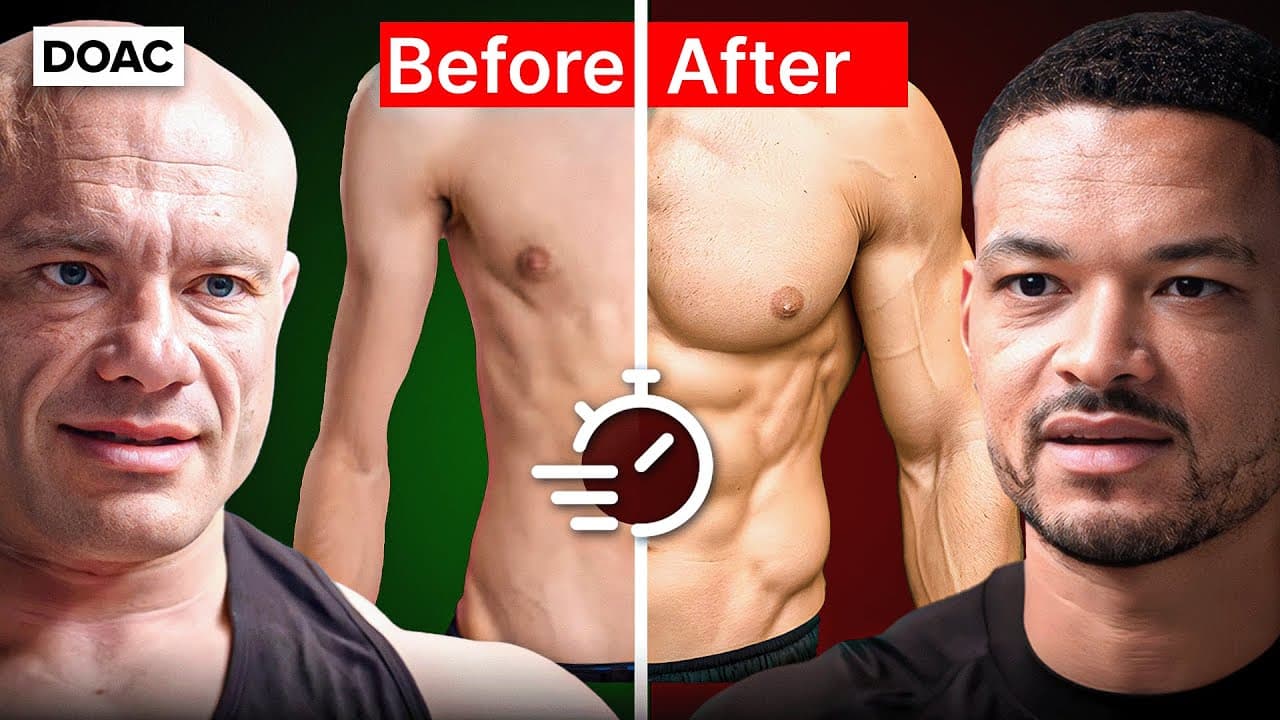
After his second daughter was born, poor sleep and stress led to a weight gain of over 190 pounds and 20% body fat. Instead of a 90-day challenge or crash diet, the decision was made to take a full year to get lean. This approach allowed for the inclusion of pizza, alcohol, and ice cream without the feeling of suffering or deprivation.
The Power of Slow Transformation (01:35 - 03:56)
- Hormonal Regulation: Fast weight loss disrupts leptin and ghrelin, leading to constant hunger. Slow loss allows these hormones to stabilize.
- Set Point Theory: The body acts like a thermostat, trying to return to its original weight. A long timeline (months to a year) resets this internal thermostat to a lower weight.
- The Timeline Problem: Most failures are not due to a lack of willpower but an unrealistic timeline. A solid foundation allows for occasional indulgence without reversing progress.
- Meal Timing: Eating 1-2 hours after waking regulates appetite for the day. A final meal 3-5 hours before bed prevents sleep disruption and metabolic slowing.
- The 90/10 Rule: 90% of calories come from single-ingredient whole foods; 10% are reserved for anything else (pizza, burgers, alcohol).
- Protein and Fiber: Targets are set at 0.7g-1g of protein per pound of body weight and 25-35g of fiber to maintain muscle and satiety.
- Lean Body Glop: A staple breakfast consisting of Greek yogurt, frozen fruit, psyllium husk, and whey protein, prepared the night before for convenience.
- AI Coaching: Utilizing an AI-based tool to track macros and provide accountability helped manage "food noise" and decision-making during social events.
- Low Volume, High Intensity: Shifting away from high-volume programs prevents overtraining and poor recovery.
- The 2-Set Method: Focusing on just two working sets per exercise, taken to near failure, with a goal of progressive overload (more reps or more weight) every session.
- Myo-reps: A rest-pause technique used for accessory muscles like shoulders to create a V-taper. This involves an activation set followed by several mini-sets with minimal rest.
- Sleep Optimization: Maintaining consistent wake/sleep times and aiming for 8 hours is critical for fat loss.
- Sun Exposure: Natural light helps regulate appetite and vitamin D levels. If sun is unavailable, supplementation with D3 and K2 is recommended after blood work.
- Non-Exercise Activity: A target of 8,000-10,000 steps daily. Movement is integrated into the day through walking meetings or under-desk treadmills rather than just dedicated cardio sessions.
- Data-Driven Progress: Tracking daily weight (to see 7-day averages), weekly waist measurements, and gym performance ensures the trend is moving in the right direction.
- Understanding Fluctuations: Daily weigh-ins educate the individual on how water weight shifts (e.g., after a high-carb meal) so they don't panic when the scale jumps temporarily.
- Business Mindset: Health should be tracked with the same rigor as business metrics like revenue or conversions.
- Be, Do, Have: Most people try to 'do' things to 'have' a result, but one must first 'be' the person who makes healthy choices.
- The Compass Question: Constantly asking, "What would the leanest, healthiest version of myself do in this situation?"
- Long-term Locking: It takes roughly six months to a year to change the body, and another year to fully lock in the new identity and lifestyle habits.